More work completed
in the factory.
Prefabrication moves assembly and testing into a controlled setting while site works proceed in parallel. NVIDIA applies this approach to an integrated AI system.
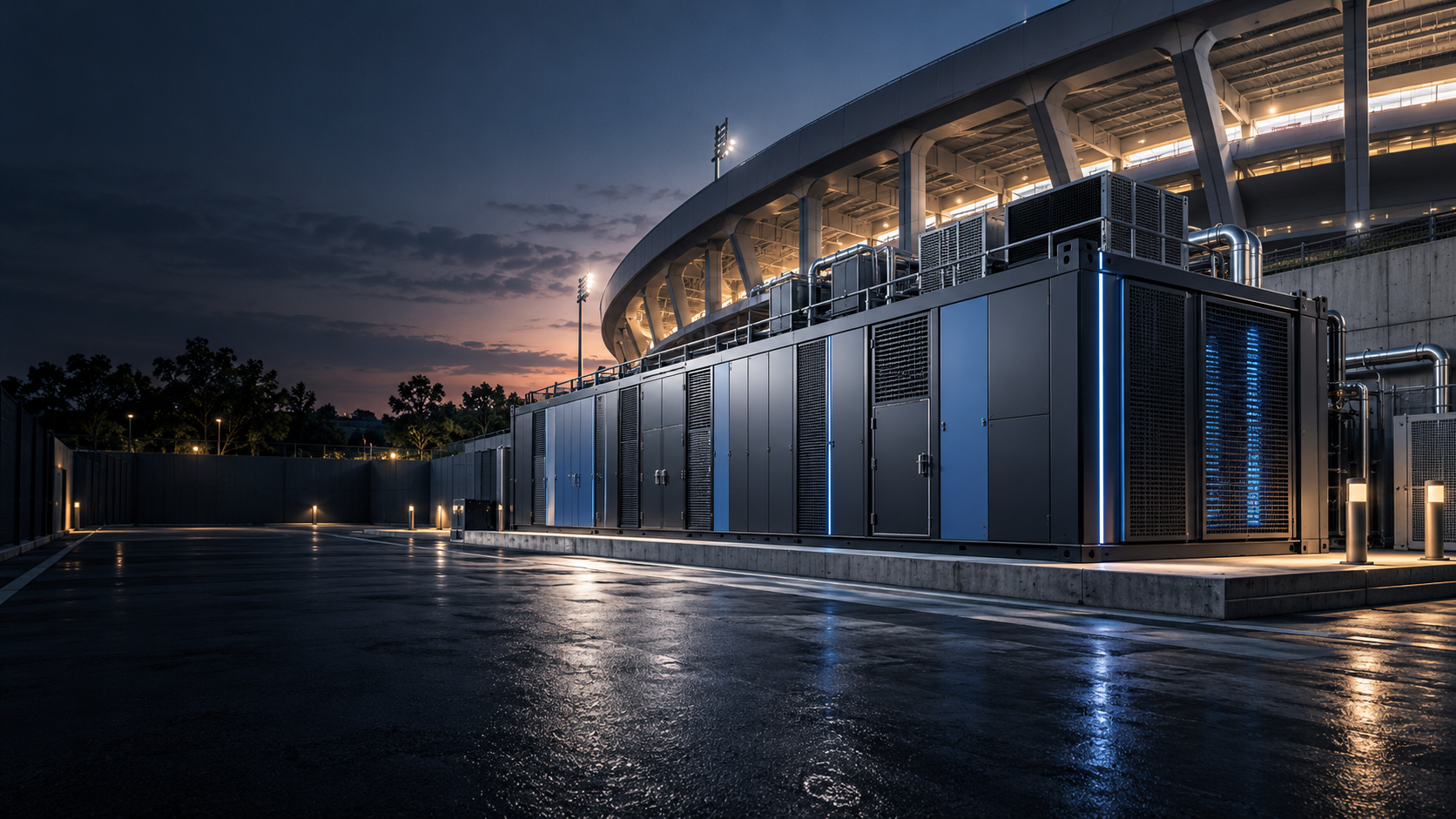
AI computing. Available power. Useful heat.
Engineered around the life of your venue.
Stadiums. Arenas.
Event campuses.
Sports venues are built for extraordinary peaks. GE HyperSport brings engineering expertise to the infrastructure between them.
We review your electrical capacity, connectivity and heat demand, then design the infrastructure for modular AI computing around your venue’s event calendar. We bring the venue and compute operator together through a coordinated engineering design.
Establish what is available, when, and on what terms.
Assess hosting partnerships against costs and utilisation.
Match recovered heat to demand, at the right temperature.
Select a numbered callout to explore the module and see what GE designs and verifies around it.
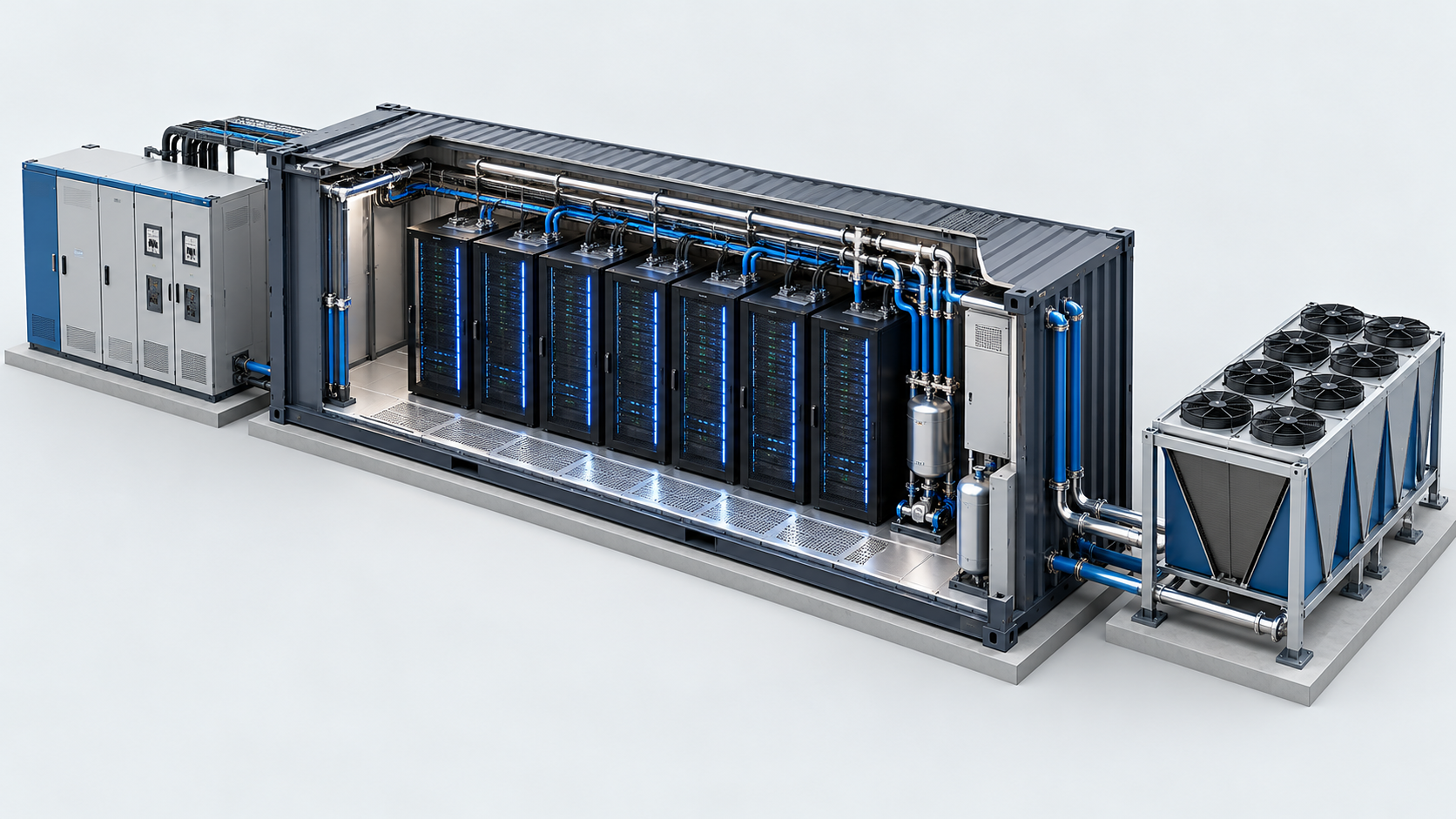
NVIDIA DSX POD is the basis of design for GE HyperSport. GE designs the power, cooling, connectivity and heat-recovery infrastructure needed to deploy the pod at your venue.
GE develops the electrical load schedule, cooling duty and site layout around the NVIDIA DSX POD architecture. NVIDIA DSX POD: 21 October 2026 · NVL72: 16 March 2026. View sources ↗
Capture heat from computing.
Connect it to your venue.
We design heat-recovery connections for water preheating, low-temperature heating and heat networks. Our assessment brings together heat output, demand, pipe routes, heat pumps and commercial value.
See GE’s integration scope ↗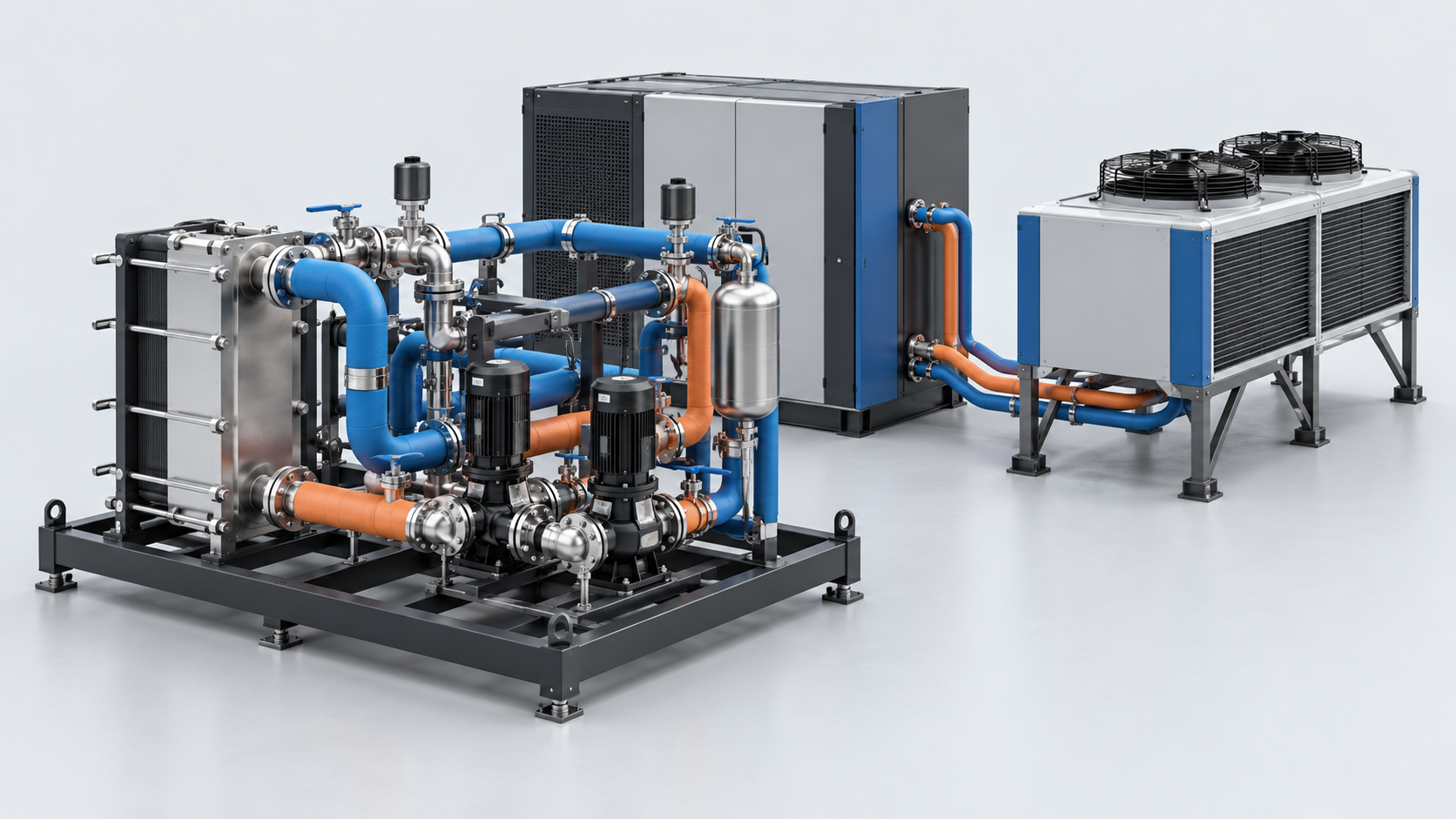
Cooling system concept
NVIDIA’s stated Vera Rubin coolant temperature. GE designs the heat-recovery circuit and delivery temperature around the heating system.
GE checks what can be recovered, when it can be used, and how surplus heat is rejected safely.
We review your infrastructure and design the elements needed to connect, protect and operate the modules. Specialist partners provide the compute platform and its operation.
We review grid agreements, metered event and non-event demand, transformers, switchgear, protection and resilience. We design the upstream distribution, conversion, cabling, earthing and metering needed to connect the NVIDIA DSX POD.
A verified capacity envelope and a coordinated electrical design.
We define physical and MEP interfaces, coordinate fibre routes and carrier requirements, and work with the specialist compute provider on service access, equipment loads and operating requirements.
A coordinated installation, with clear responsibility for the IT platform.
We establish thermal duty, flow rates and temperature limits with the supplier. We design facility pipework, pumps, heat exchangers, isolation, leak detection and controls, and coordinate coolant distribution units.
Cooling designed for the actual module duty and local conditions.
We size and locate dry coolers and any supplementary cooling. We review ambient temperatures, noise, airflow recirculation, plant access and resilience with the venue and specialist suppliers.
A dependable cooling route even when recovered heat is not required.
We plan the services layout, maintenance access and connection routes, and coordinate foundations, delivery logistics, drainage, fire strategy and security with the relevant specialists.
A module that fits the venue’s physical and operational constraints.
We compare available heat with hourly and seasonal demand. We assess heat exchangers, thermal storage and heat pumps where needed, then design the connection to suitable venue or neighbouring heating systems.
A quantified heat-use case, with temperatures, operating hours and economics stated.
We define venue-priority operating limits, electrical interlocks, BMS interfaces, alarms and response sequences. With the compute operator, we establish which workloads can reduce demand, pause or move when event loads increase.
An operating strategy that protects the venue and reflects the compute service agreement.
We prepare interface specifications and acceptance criteria, review supplier submissions and coordinate integrated tests for normal operation, peak demand, power interruption, cooling faults and heat-recovery bypass.
Documented evidence that the installed interfaces operate as intended, together with an operational digital twin and remote monitoring.
Prefabrication moves assembly and testing into a controlled setting while site works proceed in parallel. NVIDIA applies this approach to an integrated AI system.
NVIDIA describes deployment in as little as 14 days at a prepared site. GE coordinates the power, cooling, connectivity and site works that make the installation ready.
NVIDIA DSX MaxLPS manages AI workloads within an available power envelope. GE defines the venue’s electrical limits, metering and controls interfaces.
Closed-loop liquid cooling circulates coolant through the equipment and external heat exchangers. GE selects the heat-rejection plant for the site’s climate and cooling duty.
GE designs venue-priority controls and agrees the compute operating strategy with the operator, aligning electrical demand with the event calendar.
GE develops the business case for hosting income and recovered heat, bringing together investment, electricity costs, operating hours and heating demand.
Explore the NVIDIA architecture and technical publications behind our basis of design. Technical references ↗
Review power data, space, connectivity, heat demand and the event calendar.
Agree a capacity envelope, operating model and supplier configuration.
Coordinate electrical, cooling, controls and site interfaces with the delivery team.
Specify integrated tests and verify the installation against agreed criteria.
Tell us about your venue, your infrastructure and your ambitions. We’ll help establish your available power and the next steps.
NVIDIA DSX POD and Vera Rubin architecture form the basis of design for GE HyperSport. The illustrations show the GE HyperSport venue concept.